

Tyler Grange: from strong foundations to clear priorities

Key Takeaways
- Tyler Grange is a B Corp environmental consultancy with 130 people across eight UK offices.
- Includability delivered Tyler Grange's Cultural Roadmap in April 2026, covering six pillars of workplace culture.
- The Cultural Roadmap drew on a Company Support Survey, six calls with independent Partner Experts and Tyler Grange's own data.
- Every Includability Cultural Roadmap includes a Burnout Risk Review and a JEDI Gap Analysis.
- After sharing the roadmap with its leadership team, Tyler Grange chose three initial priorities.
The starting point
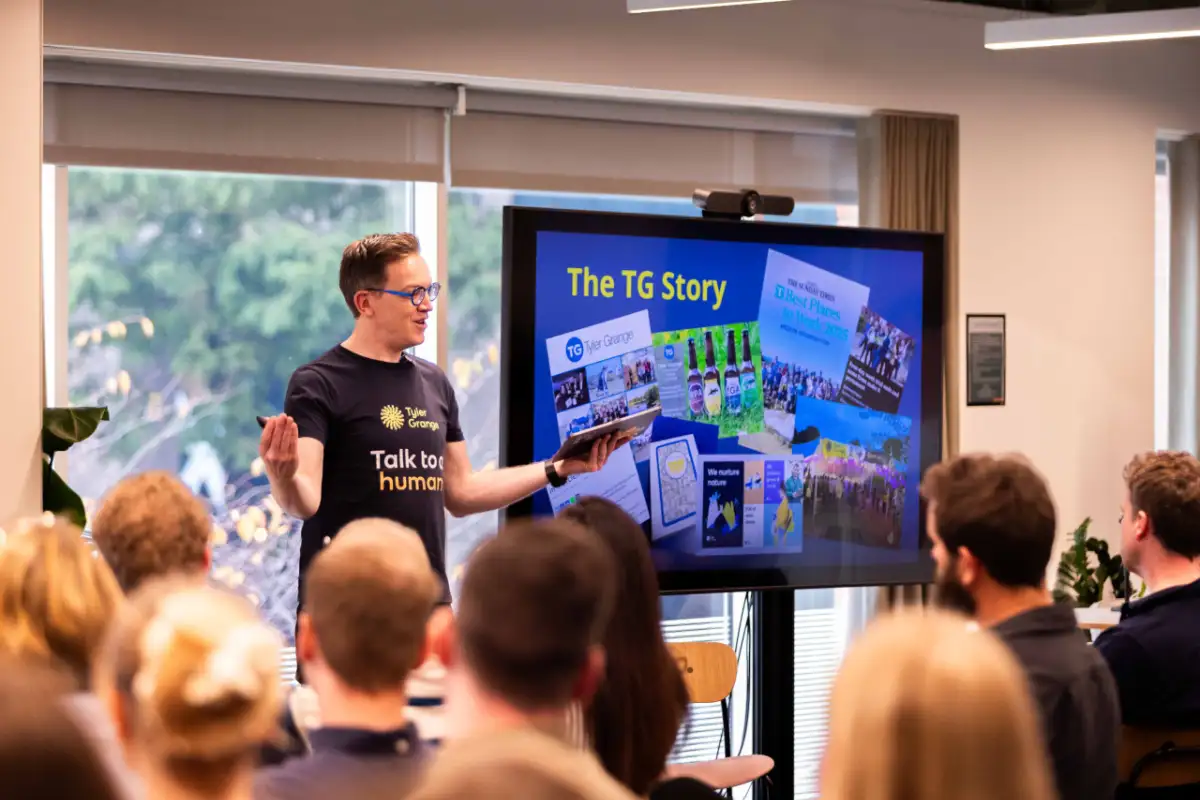
Tyler Grange came to the partnership in good shape. The whole team has worked a four-day week since 2022, pay bands are published, and people can see a clinical psychologist and a mindfulness coach. In 2024 it was named SME Employer of the Year at the InsideOut Awards for its mental health and wellbeing support.
The question was what came next. After feedback on its inclusion strategy, the People and Culture team wanted specialist guidance across all six pillars, and a clear order to work in.
"We felt that our D&I strategy could be stronger, and the hardest part for us was knowing what our priorities were and knowing where to start." Lucie Waldron, People and Culture Lead, Tyler Grange
The business is also growing, as a founding member of Myllium, an international network of nature and sustainability specialists. Growth puts pressure on the informal habits that work well at 125 to 130 people.
What we did together
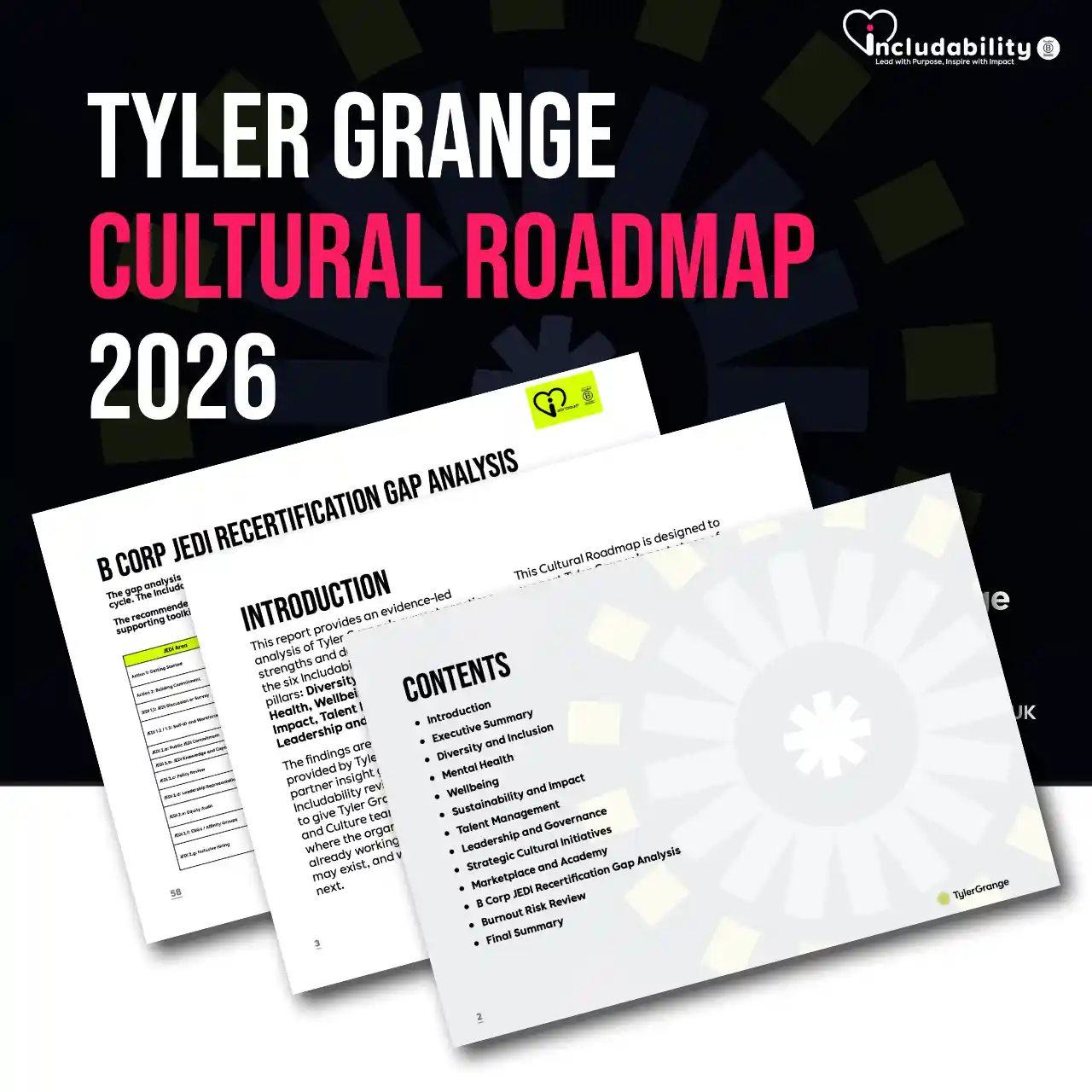
The Cultural Roadmap drew on three sources of evidence.
- Company Support Survey. A temperature check across all six pillars, so the calls started with us already understanding the business.
- Six expert calls. One per pillar, each led by an independent Partner Expert in that field. Alongside Lucie, the calls brought in the managing director and the people who lead B Corp and carbon work.
- Tyler Grange's own data. Policies, survey results, carbon reporting and HR information.
"The calls are a conversation with a specialist in that area. It feels informal and comfortable, whilst still digging into key parts of the different pillars."
Lucie found the mental health and wellbeing calls especially useful for their insight. They also gave the team some perspective.
"It felt reassuring to know that some of our frustrations weren't uncommon and that we were generally in a good place."

What the Cultural Roadmap looks at
Every roadmap covers all six pillars: Diversity and Inclusion, Mental Health, Wellbeing, Sustainability and Impact, Talent Management, and Leadership and Governance. Each pillar is reviewed by an independent Partner Expert working in that field, and each gets the same four lines in the executive summary.
- Maturity level. A written description specific to that organisation.
- Working. What is going well, with the evidence behind it.
- Watch. What is fragile, inconsistent or under pressure.
- Priority. The specific move to make next.
The roadmap then pulls the pillars together into Strategic Cultural Initiatives, the themes that run across several areas, and points to practical support through our marketplace and Academy. Two further reviews sit inside every roadmap.
- Burnout Risk Review. Where growth, workload, travel and working patterns could build pressure, which groups feel it most, and the practical steps that build resilience within teams.
- JEDI Gap Analysis. A map of current practice against the Justice, Equity, Diversity and Inclusion requirements in B Corp's V2 standards, showing where evidence is in place, partial or still to build. For B Corps like Tyler Grange it is the B Corp JEDI Gap Analysis, and each gap links to a section of our JEDI Toolkit.
The roadmap comes in two layers, which Lucie found useful.
"It was great that there were options of how to read through the roadmap: an executive summary, which was useful for sharing with others, as well as an in-depth report for those who wanted to go through all the detail."
What we see in this sector
Purpose-led environmental consultancies often start from a strong position. Sustainability is the work itself, and wellbeing offers tend to be generous. The challenges we see come with growth.
- Informal habits stop scaling. Hiring, progression and succession that run on relationships at 100 people get harder at 200 or 300.
- Managers are promoted for technical skill. Many have had little people-management or mental health training, yet they are the first point of contact when someone is struggling.
- Fieldwork raises fatigue. Site visits, early starts, travel and seasonal survey peaks mean burnout prevention needs planning, not just good intentions.
- Connection is harder across offices. Multiple locations, hybrid working and time in the field all test belonging.
- The entry routes are narrow. The sector has long drawn on the same degrees and networks, so attraction and hiring are the biggest levers on who joins.
- B Corp V2 asks for evidence. Good practice on inclusion now needs to be structured, recorded and reported to count.


Lucie Waldron, People and Culture Lead, Tyler Grange
Shared with the leadership team
Lucie shared the roadmap with the leadership team.
"The leadership team have been very receptive and open to changes. A lot of it felt like things we are already aware of and wanting to work towards, which was reassuring."
Tyler Grange has since chosen three initial priorities from the recommendations, using its own knowledge and feedback from its people to decide where to start.
As a Committed Employer, Tyler Grange also has two Burnout Awareness First Aider places each year. The training runs over four sessions: two on understanding burnout and two on building resilience in teams.
In October 2026 the business wrote publicly about its inclusion work, saying the roadmap had given it clear direction and actions to develop its inclusion strategy further. We will check back in with Tyler Grange later in the partnership to see what has changed.
FAQs
What is a Cultural Roadmap?
A Cultural Roadmap is a board-ready report from Includability that shows where an organisation's workplace culture stands across six pillars and what to prioritise next. It is built from a Company Support Survey, six calls with independent Partner Experts and the organisation's own data.
How long does a Cultural Roadmap take?
The six expert calls are usually completed within six to eight weeks. The roadmap then takes around three to four weeks to build.
Do you need to be a B Corp to have a Cultural Roadmap?
No. Every Cultural Roadmap includes a JEDI Gap Analysis. For B Corps like Tyler Grange it is mapped against B Corp's V2 standards, and the work stands on its own for organisations that are not B Corps.
What did Tyler Grange do after receiving its Cultural Roadmap?
Tyler Grange shared the roadmap with its leadership team, who were receptive and open to changes, and chose three initial priorities from its recommendations.